
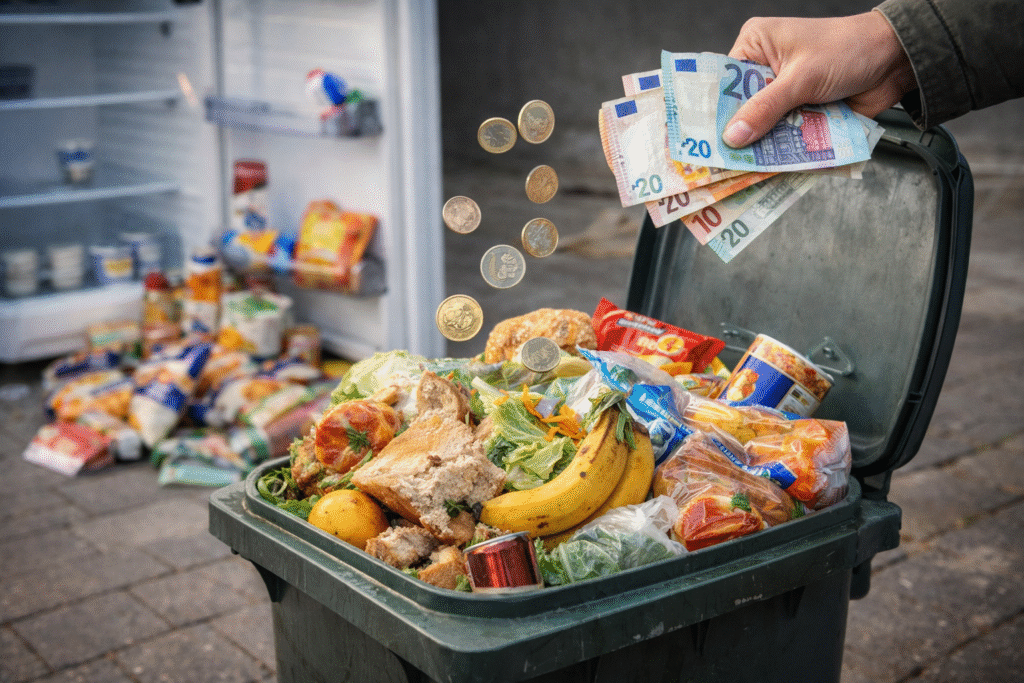
Study shatters the illusion of saving: Cheap food ends up in the bin
2026-03-09
The most vulnerable members of society try to save money by buying the cheapest food products, only to throw away a significant share of them later — an illusion of saving revealed by a study conducted in Belgium, Greece and Lithuania as part of the international research and innovation project DietWise. Researchers involved in the project stress that shopping should begin at home — by checking food stocks and preparing a shopping list. They are also developing a free solution to help people learn to cook more healthily, sustainably and affordably, starting at the recipe-selection stage.
“Just over a third of respondents admitted that they throw away too much food. They also believe that by wasting less food they could save a significant amount of their household budget,” dr. Matina Kouvari from the “Prolepsis” institute commented on the findings. She also noted that nearly half of respondents equated throwing away uneaten food with throwing money into the bin. One in three respondents said they were concerned about the amount of money lost through food waste in their households.
According to Eurostat, in 2025 alone the average European discarded around 69 kilograms of food worth approximately €155. This means that the total amount wasted reached about €450 million.
According to DietWise researchers, food waste is most often linked to a lack of shopping planning. Only 16% of survey participants said they go shopping knowing exactly how much and what kind of food they need to buy, and only one in five shops using a prepared list.
“Interestingly, a much larger share of the same respondents said they know how much money they can spend when shopping. This shows that people focus on the amount they will spend rather than on the products they will purchase,” the M. Kouvari pointed out.
According to the expert, shopping should begin at home — by checking the fridge and cupboards and making a list of ingredients needed for planned meals.
To help improve established habits, the DietWise project will develop a smart application — RecipeWatch App — designed to support healthier and more sustainable cooking. The app will act as a planning assistant helping users navigate the sea of information: using artificial intelligence, it will analyze recipes found online and suggest replacing the least healthy and least sustainable ingredients with healthier and more sustainable alternatives.
“We propose looking at the solution from a different angle. While continuous public education about healthier and more sustainable dietary choices is essential, we believe it would be far more effective if recommendations reached people where everyday decisions are actually made — when choosing what to cook and eat. Today, the internet is full of contradictory, fragmented and sometimes misleading nutrition information — in such a ‘noisy’ environment it is easy to get lost or make mistakes. Therefore, the project does not aim to further increase the flow of information, but rather to offer a different approach: working together with recipe creators and users to integrate clear, science-based recommendations directly into recipes and their usage context. The ultimate goal of the project is to help as many people as possible eat more healthily and sustainably while reducing food waste and unnecessary spending, thereby addressing public health as well as economic and environmental challenges,” says professor of KU Leuven and coordinator of the DietWise project Siegfried Dewitte.
The survey was conducted in May 2025 in Belgium, Lithuania and Greece. Participants’ vulnerability was assessed based on their socioeconomic status, age (18–21 or over 60), and belonging to an ethnic minority group. The study was carried out by Metron Analysis, surveying 150 residents in Lithuania, 173 in Belgium and 159 in Greece. Data were analyzed by the Prolepsis Institute in Greece.