
Can a short message nudge us towards healthier recipes?
2026-11-24
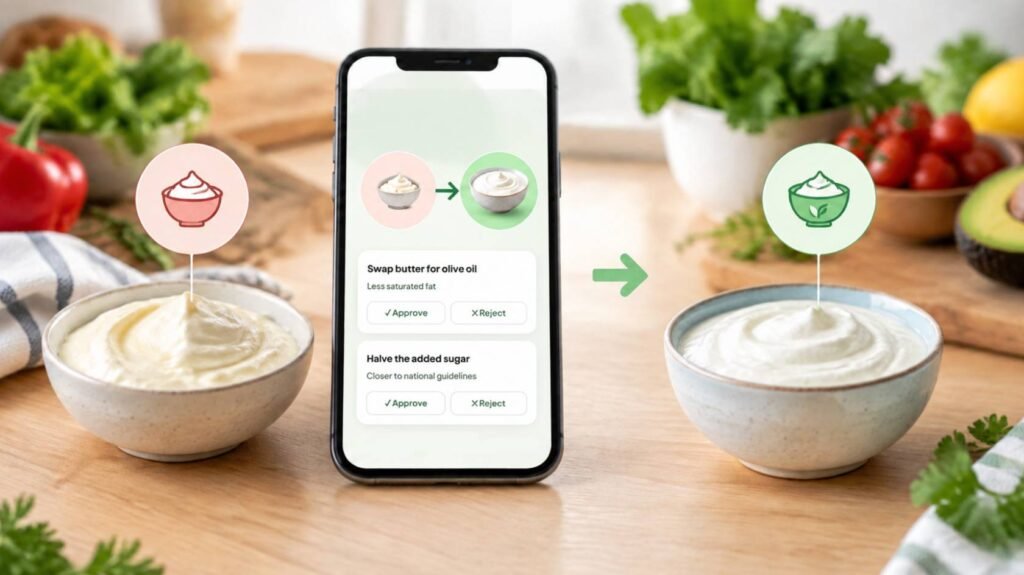
One of the key innovations of the DietWise project is MyRecipeWatch, an AI-powered app that suggests personalised corrections to online recipes so they meet nutrition guidelines. But a good suggestion only helps if people accept it. So, can a single sentence change what ends up on our dinner plates?
To find out, DietWise ran a megastudy with 10,000 people in Belgium, Lithuania, Greece and the UK. Each participant saw a familiar recipe with a suggestion to swap in a healthier ingredient. The suggestion came with one of 20 short messages, or with no message at all (for instance, “This is our users‘ favorite recommendation” or “It’s a little different, but give it a shot!”). Participants then decided whether to accept or reject the healthier ingredient.
What worked best? Without a message, 73% of participants accepted the healthier swap. Messages based on social norms (74%) and messages that give people more reasons to change, known as “Alpha” strategies (76%), made little difference. Messages that reduce reluctance to change, known as “Omega” strategies, did best: 78% accepted the swap, a clear improvement over no message. The pattern was similar in all four countries.
Who was most open? Women accepted the swap more often than men (80% vs 72%), except in Greece, where there was no gap. People who value local and seasonal food responded more strongly to the messages. Encouragingly, the messages worked just as well for people who struggle to afford food.
Why does it matter? Short, low-cost messages built into recipes can encourage healthier cooking at scale. They work best when they ease people’s doubts rather than push harder, and when they connect to what people already value. In the next phase of DietWise, the most promising messages will be tested in real-life settings.